


Handfasting Celtic triple Rope wide wedding rings, handmade in silver or gold
Handfasting Celtic triple Rope wide wedding rings, handmade in silver or gold
Couldn't load pickup availability
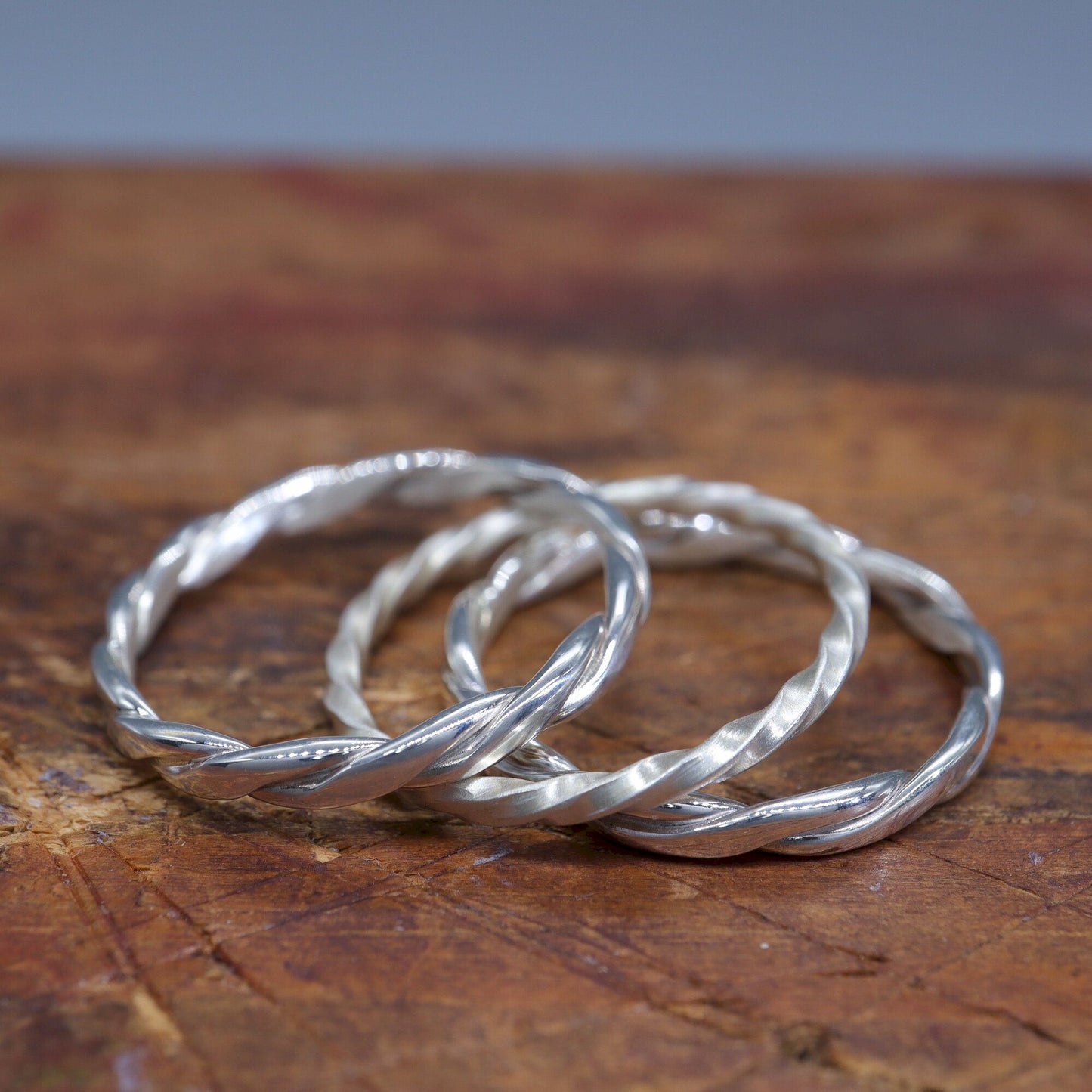
Handfasting Celtic Rope three ring wide wedding ring handmade in silver or gold
This is my Handfasting Celtic Rope wedding ring made for getting married in Scotland or who have a Scottish connection. Also for married couples wanting to celebrate their wedding anniversary by renewing their wedding vows.
It is made of three rings making a 7.5mm band, two with Handfasting Celtic Rope polished design approximately 3mm each and one single twist Scottish Rope matt design approximately 2mm made in my workshop from hand drawn wire.
The rings are made to order and I usually require around three weeks for producing them.
The rings are also available individually.
If you do not find the option you are after, or any questions regarding the bands, making times or have a special request just get in touch.
For finger sizes not shown please contact me as they are usually available.
Ref: GGHF-3-2-3mm
Item: Handfasting Celtic Rope Wedding Rings
Profile: Twist
Metal: Silver or yellow gold or white gold
Finish: Polished and Matt
Width: 8mm approximately
Info: Silver makers mark, Gold Hallmarked and made in my UK workshop
Packaging: Luxury presentation box provided
If you need a ring sizer you can find one HERE
The rest of the Handfasting rings can be found HERE
Thank you
Richard
The History of Handfasting Weddings
Handfasting is one of the oldest known marriage traditions in the British Isles, with roots stretching back hundreds, and possibly thousands, of years. The ceremony involves a couple's hands being gently tied together with ribbons, cords, or fabric to symbolise their commitment to one another. This simple yet meaningful ritual is where the well-known phrase "tying the knot" is believed to have originated.
Historically, handfasting was widely practised in parts of Scotland, Ireland, and northern England. During the medieval period, it often served as a recognised form of betrothal or marriage, particularly in rural communities where clergy were not always readily available. A couple could publicly declare their intention to marry by joining hands and exchanging vows in the presence of witnesses. In many cases, this commitment was considered legally and socially binding.
Handfasting became especially associated with the Scottish Borders and the village of Gretna Green. Following the introduction of the 1754 Marriage Act in England, which imposed stricter legal requirements for marriage, many English couples crossed the border into Scotland, where marriage laws were more relaxed. Although the famous anvil weddings at Gretna Green became the defining image of Scottish elopements, handfasting ceremonies also remained part of the area's rich wedding heritage.
In modern times, handfasting has enjoyed a remarkable revival. Couples are increasingly choosing the tradition as a symbolic addition to civil, religious, humanist, and outdoor ceremonies. Each ribbon or cord can represent different promises, family connections, or shared values, allowing the ceremony to be highly personal and unique.
Today's handfasting ceremonies blend ancient symbolism with contemporary romance. Whether celebrating Celtic heritage, embracing a rustic outdoor wedding, or simply seeking a meaningful ritual, many couples find that handfasting beautifully represents unity, partnership, and lifelong commitment. Its enduring appeal lies in its simplicity: two people joining hands, making heartfelt promises, and beginning their married life together in a tradition that has stood the test of time.
Share


Contact Richard
When sending a message to me please describe the item you are looking at or send a link to the page so I can answer your question quickly. Thank you, Richard.